

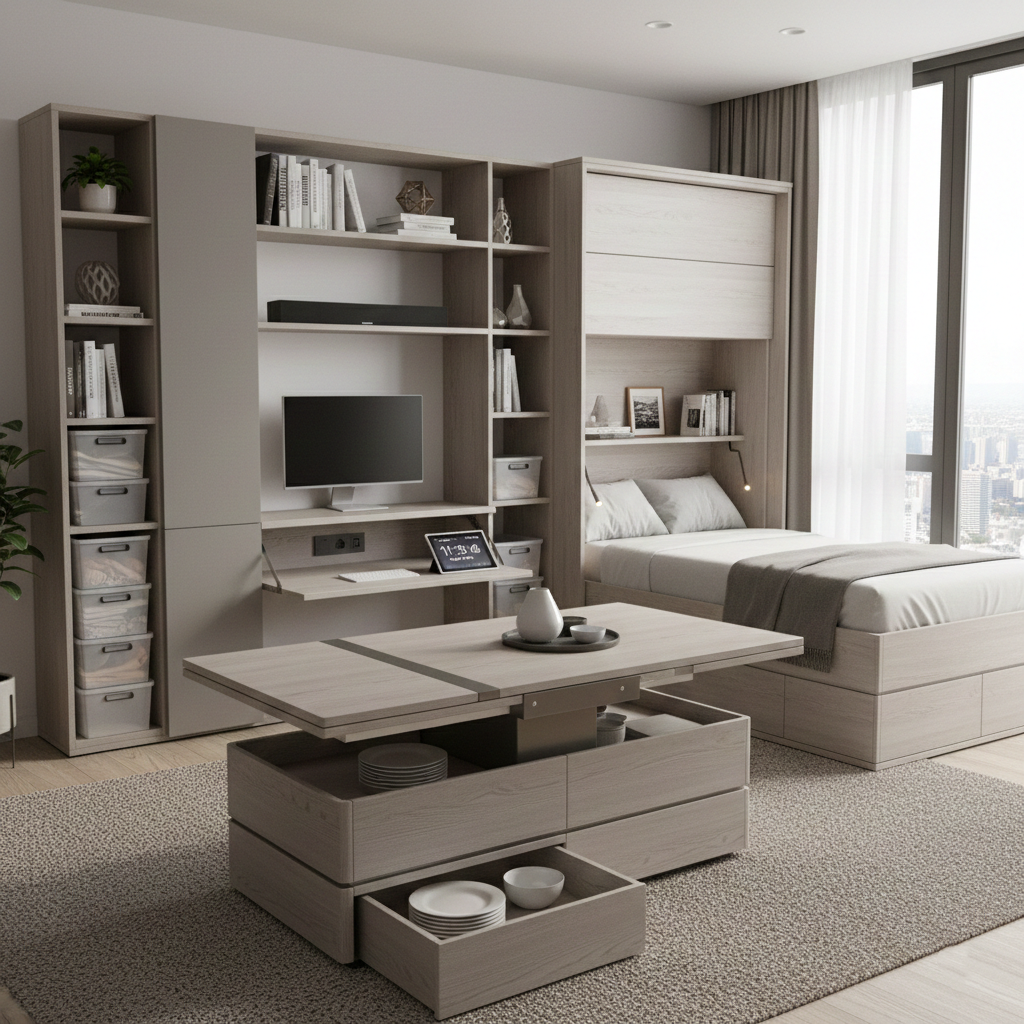
Homes today are being asked to do more than they once did. A single room often carries several roles at once. A living room hosts guests, turns into a workspace, and becomes a place to relax at night. Bedrooms are no longer just for sleeping. They hold wardrobes, study tables, exercise equipment, and sometimes even storage for things that do not fit anywhere else. As this shift happens, the way furniture is chosen has also started to change.
Earlier, storage was handled separately. A bed was a bed. A sofa was only for sitting. Storage meant adding cupboards, trunks, or large cabinets wherever space allowed. This approach worked when homes were bigger and layouts were simpler. Today, however, that method often creates clutter instead of solving it. Too many standalone units make rooms feel crowded and limit how people move within the space.
This is where multi purpose furniture becomes important. It allows everyday furniture to carry storage within it, reducing the need for extra units. The result is not just a cleaner looking home, but one that is easier to live in on a daily basis. When storage is already built into the furniture being used, organisation feels natural rather than forced.
Storage Beds and Sofas
Beds take up a significant amount of space in any bedroom. For a long time, the area under the bed was either ignored or used randomly with boxes that were hard to reach. Storage beds changed this entirely. Drawers under the bed or lift up storage use that space in a planned way, turning it into a proper storage area rather than wasted space.
In many homes, storage beds end up replacing an extra cupboard altogether. Bedding, winter clothes, spare pillows, luggage, and even old books find a place there. Because everything is neatly tucked away under the bed, the room stays visually calmer. This balance works especially well with a wardrobe for bedroom, as they no longer need to handle bulky or seasonal items. Instead of clutter building up around or on top of wardrobes, the bedroom remains organised, spacious, and easier to maintain.
Sofas work in a similar way in living rooms. A sofa with storage beneath the seat can quietly hold items that otherwise create mess. Extra cushions, throws, children’s toys, newspapers, or even work bags can be put away easily. For homes that receive guests often, sofa beds with storage remove the need for separate guest bedding cupboards.
What makes these pieces useful is that the storage does not demand extra effort. You are already using the bed or sofa every day. The storage simply becomes part of that routine.
Modular Cabinets and Shelving Units
One of the biggest problems with traditional cabinets is that they are fixed. Once placed, they rarely change. But storage needs are never fixed. They grow, shrink, and shift with time. Modular cabinets and shelving units allow homes to respond to these changes.
Instead of one large cupboard that takes up an entire wall, modular furniture breaks storage into smaller parts. Shelves can be added where needed and removed when they are not. Cabinets can be arranged differently if the room layout changes. This flexibility makes a big difference in homes where space is limited.
Open cubbies are especially useful for items that are used often. Books, files, or everyday objects are easy to access without opening and closing heavy doors. Closed modules can be used for items that are better kept out of sight. Over time, the combination can be adjusted without replacing everything.
Modular storage also works well in homes where one room serves multiple purposes. A shelving unit can separate a work area from a seating space while still holding storage on both sides. This removes the need for additional partitions or cabinets.
Multi Functional Tables
Tables are usually chosen for their surface, not for what they can hold. But in smaller homes, tables that include storage make everyday life easier. Coffee tables with drawers or shelves are a good example. They quietly take care of items that otherwise end up scattered around the room.
Remote controls, notebooks, chargers, magazines, and even snacks can be stored within reach. This reduces the need for side racks or additional shelves. Lift top coffee tables are useful in homes where dining, working, and relaxing happen in the same space. The top can be raised when needed, while the inside stores items that would otherwise clutter the table.
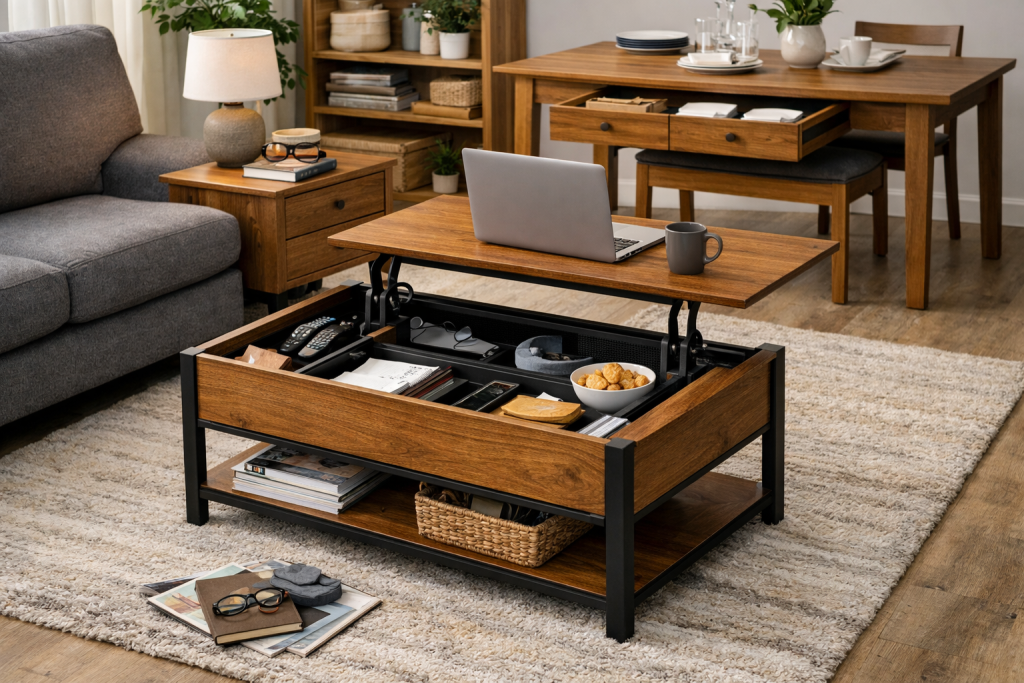
Side tables with drawers work well beside beds or sofas. They replace the need for extra shelves while keeping essentials close. Dining tables with storage compartments are less common but very practical. Cutlery, placemats, and serving items can stay near the dining area without requiring a separate cabinet.
These tables do not announce their storage. They simply do their job quietly, making the space easier to manage.
Seating That Doubles as Storage
Extra seating is always useful, but it often creates storage problems of its own. Chairs and stools take up space without offering anything beyond seating. Storage seating solves this by serving two purposes at once.
Ottomans with storage are commonly used in living rooms. They hold blankets, cushions, or toys while also acting as footrests or additional seats. Benches with storage work well in bedrooms, dining areas, and entryways. In an entryway, a storage bench keeps shoes and bags organised while offering a place to sit.
Poufs with storage are especially helpful in small homes. They are light, easy to move, and can be placed wherever needed. When guests arrive, they provide seating. When not in use, they quietly store items inside.
By choosing seating that also stores items, the need for separate boxes, trunks, or shoe rack is reduced. This keeps rooms open and easier to move through.
Conclusion
Multi purpose furniture replaces traditional storage by making better use of the furniture that already exists in a home. Instead of adding more units, storage becomes part of daily use. Beds, sofas, tables, and seating quietly take care of organisation without demanding extra space.
This approach helps homes feel calmer and more manageable. Rooms look less crowded, and cleaning becomes simpler. Storage stops being something that needs constant attention and becomes part of the furniture itself.
For homes that are growing, changing, or simply trying to use space better, multi purpose furniture offers a practical way forward. It supports daily life without adding complexity, allowing homes to feel organised without feeling full.