

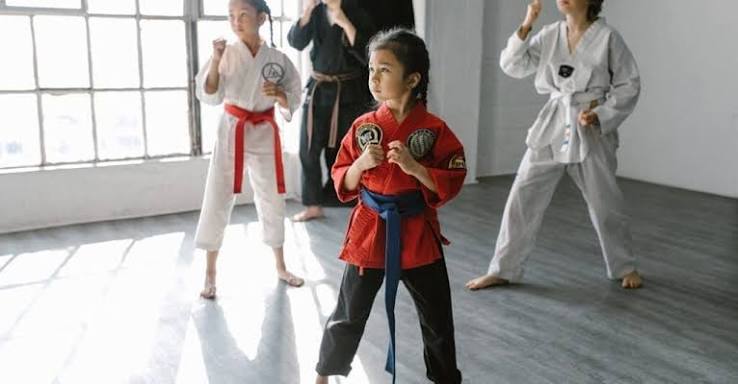
Preschool is an important stage for building the basic physical, social, and learning skills children will use for years to come. At this age, children are naturally active, curious, and eager to explore how their bodies work. This makes movement-based activities an excellent way to support early development. Preschool martial arts classes can give young children a structured environment where they learn to move with purpose, listen carefully, follow directions, and interact respectfully with instructors and classmates. At Soaring Eagle Tae Kwon Do, martial arts training can be viewed as more than learning kicks, punches, or traditional forms. For preschoolers, age-appropriate Tae Kwon Do can become a fun learning experience that combines physical activity with important developmental skills. Coordination and listening are especially valuable because they influence how children participate in school, sports, play, and everyday activities. When a child learns to watch an instructor, understand a simple direction, and coordinate their hands, feet, eyes, and body, they are practicing skills that reach far beyond the martial arts studio. Preschool martial arts training also introduces children to routines, personal space, balance, body control, and respectful communication. These experiences can help young learners become more confident while giving parents a positive way to encourage healthy movement and focused behavior. The key is using teaching methods that match a preschooler’s age, attention span, physical abilities, and emotional development. A well-designed program should feel engaging rather than overwhelming, allowing children to learn through repetition, encouragement, games, and simple martial arts movements.
Building Whole-Body Coordination Through Movement
Coordination means being able to make different parts of the body work together smoothly. For a preschool child, this skill is still developing, which is why activities that involve balance, stepping, reaching, turning, and controlled movement can be so useful. Preschool martial arts classes naturally encourage children to coordinate their eyes, hands, feet, and body while responding to an instructor. A simple Tae Kwon Do activity might ask a child to stand in a particular position, step forward, raise their hands, or perform a basic movement. Although the exercise may look simple to an adult, the child is managing several physical tasks at the same time. They must understand where their body is in space, control the speed of the movement, maintain balance, and remember what comes next. Repeated practice helps these movements become more natural. Over time, children may develop stronger body awareness, improved balance, better motor control, and greater confidence in physical activities. These skills can also support other childhood activities, including running, jumping, climbing, catching, dancing, and playing on playground equipment. Martial arts for young children should not focus on advanced techniques or competition. Instead, instructors can use age-appropriate drills that make movement enjoyable while giving children opportunities to practice coordination in a safe and structured setting. At Soaring Eagle Tae Kwon Do, a child-centered approach to preschool training can help make each class an opportunity to learn through movement while keeping activities suitable for young learners.
How Martial Arts Encourage Active Listening
Listening is another major skill that develops through structured martial arts practice. Preschoolers are often learning how to stop what they are doing, pay attention to an adult, process information, and respond appropriately. Preschool martial arts classes can reinforce these habits through short, clear instructions and consistent routines. An instructor may give a simple direction such as standing still, changing position, raising a hand, or moving to a designated space. The child must listen, understand the instruction, and then turn that information into action. This creates a natural connection between hearing, thinking, and movement. Repetition is especially helpful for preschoolers because young children often learn best when expectations are predictable and instructions are presented in an engaging way. Martial arts classes can also teach children to listen for changes in rhythm, commands, or movement patterns. As their confidence grows, they may become more comfortable waiting for instructions instead of rushing ahead. That ability to pause and listen can be useful in classrooms, at home, and during group activities. Active listening is not simply about being quiet; it involves paying attention, remembering information, and responding appropriately. A positive Tae Kwon Do instructor can reinforce these behaviors with encouragement rather than harsh correction, helping children understand that listening is part of learning. When children associate careful listening with successful movement and enjoyable activities, they can begin to see focused attention as a useful skill rather than a restriction.
Strengthening Focus, Memory, and Following Directions
Coordination and listening are closely connected to other early learning abilities, including focus and memory. A preschool child may need to remember a short sequence of movements, recognize a familiar class routine, or repeat a technique after watching the instructor. These small challenges give children opportunities to practice concentration in a physical setting. In preschool martial arts classes, instructors can break activities into manageable steps so children are not expected to remember too much at once. For example, an instructor might first demonstrate a stance, allow children to practice it, and then add one simple movement. This gradual approach can make learning easier while encouraging children to remember what they have already practiced. Martial arts also provide immediate physical feedback. If a child loses balance or forgets where to place their feet, the movement itself can show them that something needs adjustment. With patient instruction and repetition, children can learn to try again without viewing mistakes as failure. This process supports persistence and a growth mindset. The structured nature of Tae Kwon Do can also help children understand that learning happens step by step. They may begin by mastering basic movements and routines before progressing to more challenging skills. Parents can reinforce this progress by celebrating effort, attention, and improvement instead of focusing only on performance. When children learn that careful listening and steady practice lead to progress, they develop habits that can support early academic learning as well as physical development.
Developing Confidence Through Structure and Success
Preschoolers benefit from environments where expectations are clear and achievements are recognized. Martial arts can provide this type of structure while giving children frequent opportunities to experience success. A child might learn how to perform a basic stance correctly, follow a class command, complete a movement sequence, or participate confidently in a group activity. Each accomplishment can strengthen their belief that they are capable of learning something new. Preschool martial arts classes can also encourage children to become more comfortable participating in front of others. At first, some children may be shy or hesitant to follow along. With consistent encouragement, they may gradually become more willing to raise their hands, copy movements, speak clearly, and take part in class. This confidence can extend beyond the studio. Children who become more comfortable listening and responding in a structured setting may find it easier to participate in preschool activities and other group experiences. Tae Kwon Do also introduces ideas such as respect, patience, self-control, and perseverance. These values can be taught through simple age-appropriate lessons rather than complicated explanations. The goal is to help children understand that martial arts are about learning control and discipline, not simply physical strength. A supportive instructor can model respectful behavior and create a welcoming environment where every child feels encouraged to improve. For families considering martial arts for preschoolers, choosing a program that prioritizes safety, positive instruction, developmental readiness, and enjoyment is important. Soaring Eagle Tae Kwon Do can be presented as a place where young students have the opportunity to build foundational movement and listening skills while discovering the confidence that comes from steady practice.
Choosing the Right Preschool Martial Arts Program
Not every martial arts class is designed specifically for preschool children, so parents should look for a program that recognizes the unique needs of young learners. The best Preschool martial arts classes use age-appropriate instruction, simple directions, active learning, repetition, and positive reinforcement. Young children should have opportunities to move and practice without being pushed into techniques that are beyond their developmental level. Class structure matters, too. Preschoolers generally respond well to predictable routines that include warm-up activities, simple instruction, movement practice, and engaging exercises. A qualified instructor should be able to communicate clearly with young children and maintain a safe, respectful learning environment. Parents may also want to consider whether the program teaches broader life skills such as listening, patience, courtesy, confidence, and self-control. Tae Kwon Do can be particularly useful as a structured activity because children learn to connect physical actions with verbal instructions and classroom expectations. At Soaring Eagle Tae Kwon Do, families can look for an approach that makes learning enjoyable while helping children develop skills at their own pace. The purpose of preschool martial arts should not be to create young competitors. It should be to provide a positive foundation for physical literacy, attention, confidence, and respectful behavior. When children enjoy their classes, they are more likely to stay engaged and continue practicing. That positive relationship with movement and learning can become one of the most valuable outcomes of starting martial arts at a young age.
Conclusion
Preschool martial arts classes can do much more than introduce children to the foundations of Tae Kwon Do. They can create meaningful opportunities for preschoolers to strengthen coordination, active listening, focus, memory, confidence, balance, and self-control in an engaging environment. Each simple movement asks children to connect what they hear with what their bodies do, helping them practice important skills through repetition and play. With supportive instruction, young students can learn to listen carefully, follow directions, control their movements, and keep trying when something feels challenging. These abilities can benefit children at home, in preschool, on the playground, and in future activities. For parents looking for a structured physical activity, Soaring Eagle Tae Kwon Do can offer a positive setting where young children can explore martial arts while developing skills that support healthy growth and lifelong learning. The most effective preschool program is one that places safety, encouragement, age-appropriate teaching, and personal progress at the center of every class. When martial arts are taught with these principles in mind, a preschooler’s training can become more than a weekly activity—it can be a fun foundation for confident movement, focused listening, and continued personal growth.
