

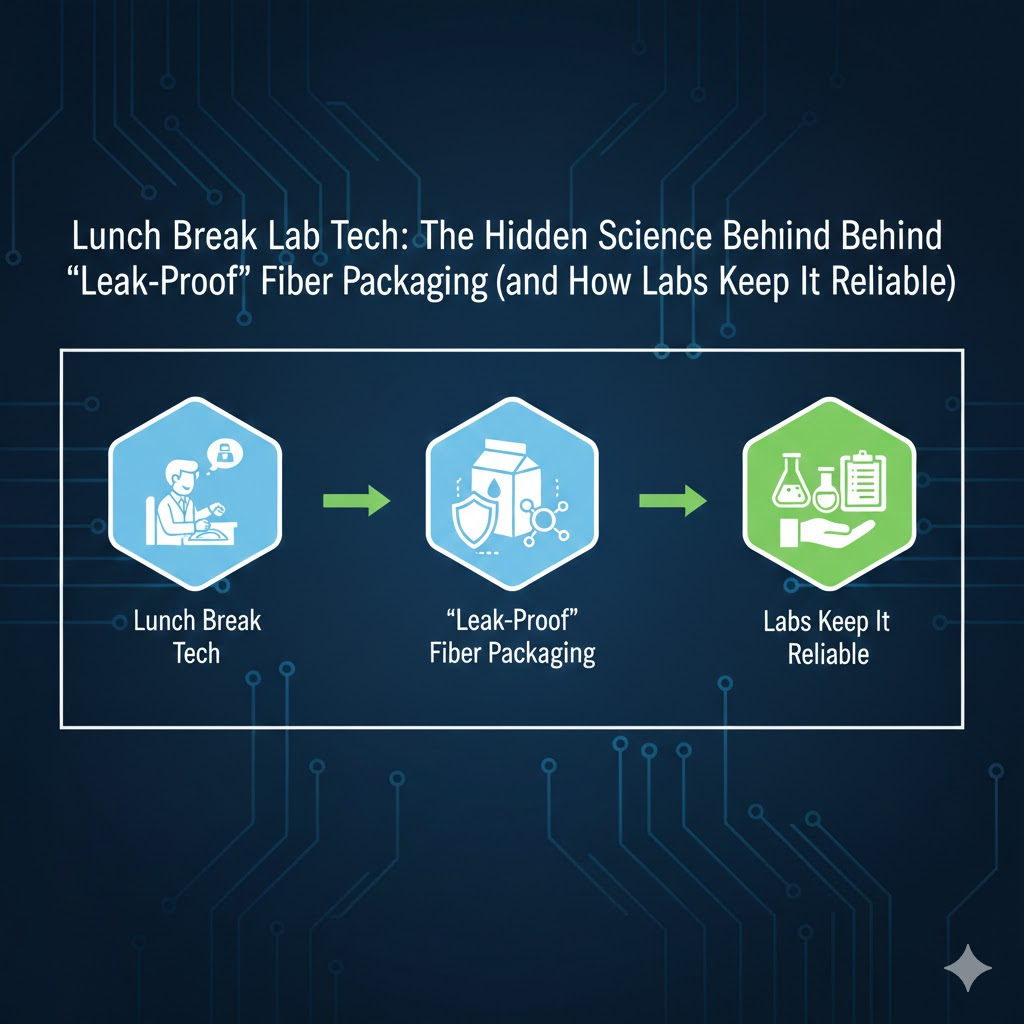
Lunch is the one time of day when people demand fast, clean, and predictable performance—whether it’s a meal in a canteen, a takeaway bowl on a desk, or a catering tray in transit. What most people don’t see is that “doesn’t leak,” “doesn’t sog,” and “doesn’t smell” are engineering outcomes, not marketing slogans. Manufacturers such as Bioleader operate in this intersection—where food-contact compliance, repeatable production, and real-world lunch logistics meet.
This lunch-time micro-brief breaks down the lab thinking behind modern fiber-based packaging: how barrier performance is tested, why humidity is the real enemy, and what basic equipment-maintenance principles keep quality stable at scale. If you’re comparing molded-fiber options for foodservice, a practical reference point is “sugarcane bagasse tableware for hot, saucy lunch service”—a category built around stackability, rim stability, and heat holding, not just appearances: sugarcane bagasse tableware for hot, saucy lunch service.
The Unsexy Villain: Water Activity, Not Just “Moisture”
If you’ve ever had a paper bowl go soft, you’ve met the chemistry of water activity (aw). It’s not just how wet something is—it’s how available the water is to move, dissolve, and migrate into packaging fibers.
Why it matters at lunch:
- Hot soups and saucy noodles don’t just carry liquid; they carry heat + salts + acids + oils, which accelerate penetration.
- Steam inside a closed container creates condensation cycles: vapor → droplets → re-absorption. That repeated cycling breaks fiber networks faster than a one-time splash.
- Grease isn’t “dry.” Oils can carry flavor compounds and migrate through weak barrier zones.
Practical takeaway: A container that passes a quick “fill with water” demo can still fail with real lunch conditions (heat + time + lid + agitation). Quality labs simulate lunch reality instead of relying on a single wet test.
The Core Lab Tests That Predict Lunch Performance
You don’t need a PhD to understand the logic—just the idea that performance must be measurable. Here are the tests that best predict whether a molded-fiber or paper container will behave at lunch.
1) Cobb Test (Water Absorption)
Cobb values measure how much water a material absorbs over a set time (often 60–120 seconds). Lower absorption generally means better resistance to sogging.
- Why it’s useful: Fast, comparable, and good for screening batches.
- Why it’s not enough: Cobb doesn’t fully capture hot oil, acids, or steam cycles.
2) Kit Test (Grease Resistance)
A standardized mixture challenges the surface; higher kit ratings indicate stronger grease barriers.
- Lunch relevance: Stir-fry oils, burger juices, salad dressings.
- Real-world nuance: If the barrier is inconsistent (thin spots, poor forming pressure), average results can look “fine” while random failures still happen.
3) Wet Strength & Burst Strength
Wet strength is the ability to retain integrity when saturated; burst strength estimates resistance to rupture under pressure.
- Lunch relevance: When customers grip a hot bowl, walls experience compression and shear—wet fibers collapse more easily.
4) Thermal Cycling & Hold-Time Testing
This is where labs mimic lunch reality:
- Fill with hot food simulants
- Close with a lid
- Hold at 60–90°C for 20–60 minutes
- Shake/tilt to simulate delivery
- Check deformation, leakage, delamination, odor transfer
If you only remember one thing: “Leak-proof” is usually a hold-time claim, not a material claim.
Maintenance Tip from the Factory Floor: Quality Often Fails in the “Invisible” Places
Here’s the lunchnewsletter-style micro-lesson:
Most packaging defects come from drift, not disasters.
A machine doesn’t have to “break” to cause failure. It only has to slowly move out of ideal conditions.
Common drift points:
- Forming pressure drift: Slightly lower pressure → poorer fiber consolidation → micro-channels that leak under heat.
- Mold vent clogging: Trapped air prevents uniform fiber packing; weak zones appear at corners and rim lines.
- Moisture content drift in pulp: Too wet → shrink/warping; too dry → brittle edges and micro-cracks.
- Drying profile drift: Uneven drying creates internal stresses that show up later as rim curl or lid-fit failures.
Simple preventive maintenance habits (high ROI):
- Clean mold vents and vacuum lines on schedule (vents clog quietly).
- Track pulp consistency and temperature every shift (not just daily).
- Calibrate pressure sensors and temperature probes regularly (instrument drift is real).
- Use “first-article” checks at shift start: weight, thickness, rim flatness, lid fit.
These are the same principles you see in biotech labs: control variables, document variance, and react before defects become visible.
A Quick Reality Check: Humidity Is a Performance Multiplier
Fiber-based packaging is not only a materials problem—it’s a climate problem.
In high humidity:
- Fibers begin the day partially hydrated (lower margin before sogging)
- Storage cartons can absorb moisture
- Coatings can behave differently
- Stacks can block airflow and dry unevenly
That’s why mature factories treat storage like a mini lab environment: RH targets, airflow planning, FIFO discipline, and packaging that protects the packaging.
Where the Industry Is Heading: Fiber Barriers That Behave Like Engineered Surfaces
The most important trend in compostable and fiber packaging isn’t “switching materials.” It’s engineering interfaces.
Modern barrier approaches focus on:
- Surface energy control: making liquids bead instead of spread
- Microstructure sealing: reducing capillary pathways in fiber networks
- Coating uniformity: consistent coverage at corners and rims (where failures happen)
- Heat-stable barriers: preventing breakdown during hot holds
Lunch is becoming more demanding: more delivery, longer hold times, more saucy global foods, and higher consumer expectations. In that context, choosing a supplier isn’t only about “eco.” It’s about whether they can deliver repeatable performance across large volumes.
The “Lunch Lab” Checklist: How to Evaluate a Container Like a Technician
Next time you’re testing a bowl or clamshell, run this technician-style checklist:
- Corner challenge: Add hot liquid; press corners after 10–20 minutes.
- Rim integrity: Check rim flatness after heat hold; rim curl predicts lid leaks.
- Lid seal under steam: Close on hot contents, wait for condensation, then tilt 15–30°.
- Grip test: Hold like a customer; if walls deform, wet strength is insufficient.
- Odor transfer: Smell inside after a 30-minute hold to detect off-notes.
- Stack compression: Stack 10–20 units with weight; watch rim deformation and lid-fit drift.
This isn’t overkill—it’s simulating lunch reality.
Bottom Line: Lunch Packaging Is Quietly Becoming Lab-Grade
The future of lunch packaging is less about “paper vs plastic” and more about controlled performance under messy real-world conditions. The winners will be the ones with stable barrier results, tight process control, and maintenance discipline that prevents drift—so the last container performs like the first.
If you want, I can also reshape this into a more “newsletter” voice with 5–7 ultra-short “lab tip” cards while keeping the same scientific rigor and your link rules.
