

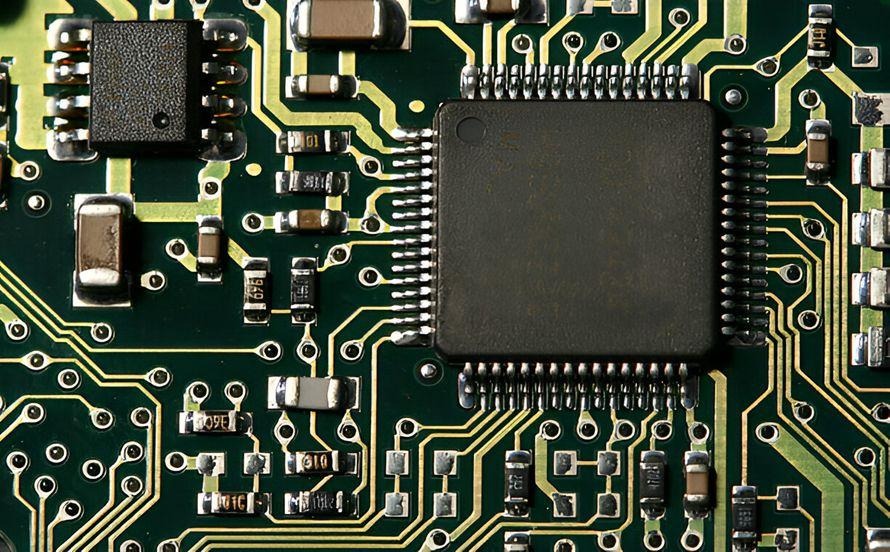
The electronics industry has evolved rapidly over the past few decades, driven by increasing demand for smaller, faster, and more powerful devices. From smartphones and laptops to medical equipment and automotive electronics, modern products require compact and highly efficient circuit boards. One of the key technologies enabling this advancement is SMT assembly. As the standard method for manufacturing electronic products today, SMT assembly allows manufacturers to place thousands of components on a printed circuit board with exceptional speed and accuracy.
The widespread adoption of SMT technology has transformed electronics manufacturing by improving production efficiency, reducing costs, and supporting the miniaturization of electronic devices. Understanding SMT assembly is essential for engineers, product developers, and businesses involved in electronics production.
What Is SMT Assembly?
SMT assembly stands for Surface Mount Technology assembly, a process in which electronic components are mounted directly onto the surface of a printed circuit board (PCB). Unlike traditional through-hole technology, which requires component leads to be inserted into drilled holes, SMT components are soldered directly onto surface-mounted pads.
This approach enables manufacturers to place components on both sides of the PCB, significantly increasing circuit density while reducing board size. SMT assembly supports a wide range of electronic components, including resistors, capacitors, integrated circuits, transistors, connectors, and microprocessors.
Today, the majority of consumer electronics, industrial equipment, telecommunications devices, and medical products are manufactured using SMT assembly techniques.
Why SMT Assembly Is Important
The importance of SMT assembly lies in its ability to support modern electronic design requirements. As electronic devices become more compact and feature-rich, traditional assembly methods often cannot provide the necessary component density or manufacturing efficiency.
SMT assembly allows for smaller component sizes, shorter electrical paths, and higher production speeds. This results in lighter, more reliable, and more powerful electronic products.
The process also supports automated manufacturing, reducing labor costs and improving production consistency. These advantages have made SMT assembly the preferred method for high-volume electronics manufacturing worldwide.
The SMT Assembly Process
The SMT assembly process involves several carefully controlled manufacturing stages to ensure accurate component placement and reliable solder connections.
The process begins with solder paste printing. A stainless-steel stencil is used to apply solder paste onto the PCB pads where components will be mounted. The solder paste contains tiny metal particles suspended in flux, which helps create strong electrical connections during soldering.
Once the solder paste is applied, automated pick-and-place machines position electronic components onto the board. Modern machines can place tens of thousands of components per hour with extremely high accuracy.
After component placement, the board passes through a reflow soldering oven. Controlled heating melts the solder paste, creating permanent electrical and mechanical connections between the components and PCB.
Following soldering, the assembled board undergoes inspection and testing to verify quality and functionality before moving to final assembly or shipment.
Key Equipment Used in SMT Assembly
Modern SMT assembly relies on advanced manufacturing equipment to achieve speed, precision, and consistency.
Solder paste printers ensure accurate and repeatable application of solder paste. Proper solder paste deposition is critical for creating reliable solder joints.
Pick-and-place machines use robotic systems to position components accurately on the PCB. These machines can handle components ranging from tiny passive devices to complex integrated circuits.
Reflow ovens provide carefully controlled temperature profiles that melt solder paste without damaging components.
Automated Optical Inspection (AOI) systems examine assembled boards for defects such as missing components, incorrect placement, insufficient solder, and bridging.
X-ray inspection equipment is often used for advanced packages such as Ball Grid Arrays (BGAs), where solder joints are hidden beneath the component.
These technologies work together to ensure efficient and reliable SMT assembly production.
Advantages of SMT Assembly
One of the biggest benefits of SMT assembly is its ability to support miniaturization. Surface-mount components are significantly smaller than traditional through-hole components, allowing designers to create compact electronic products.
Another major advantage is improved manufacturing efficiency. Automated SMT production lines can assemble large quantities of circuit boards quickly and accurately.
Higher component density is also possible because components can be mounted on both sides of the PCB. This enables more complex circuits within smaller board areas.
SMT assembly often improves electrical performance by reducing lead lengths and minimizing signal interference.
The process also offers lower manufacturing costs in high-volume production environments because automation reduces manual labor requirements.
These advantages have made SMT assembly the dominant technology in modern electronics manufacturing.
Applications of SMT Assembly
The versatility of SMT assembly has made it essential across numerous industries.
Consumer electronics manufacturers use SMT assembly to produce smartphones, tablets, laptops, gaming devices, smartwatches, and home appliances. The compact size and high functionality of these products depend heavily on SMT technology.
Automotive electronics rely on SMT assembly for engine control units, advanced driver-assistance systems, infotainment modules, sensors, and battery management systems.
Medical device manufacturers use SMT assembly for patient monitoring equipment, diagnostic systems, wearable health devices, and imaging technologies.
Industrial automation systems incorporate SMT-assembled PCBs in robotics, programmable logic controllers, monitoring equipment, and communication systems.
Telecommunications infrastructure such as routers, switches, wireless access points, and 5G equipment also depends on SMT assembly for reliable performance.
The broad range of applications demonstrates the importance of SMT assembly in modern technology.
Quality Control in SMT Assembly
Maintaining quality is a critical aspect of SMT assembly because even minor defects can impact product performance and reliability.
Solder Paste Inspection (SPI) is often performed immediately after solder paste printing to verify correct solder volume and placement.
Automated Optical Inspection systems detect component placement errors, missing parts, polarity issues, and soldering defects.
X-ray inspection is used for complex components with hidden solder joints that cannot be visually inspected.
In-circuit testing verifies electrical performance by checking component values and circuit continuity.
Functional testing simulates actual operating conditions to ensure the completed product performs according to specifications.
Comprehensive quality control procedures help manufacturers achieve high yields and dependable product performance.
Challenges in SMT Assembly
Although SMT assembly offers numerous advantages, it also presents certain challenges.
The process requires precise control of solder paste application, component placement, and reflow temperatures. Small variations can lead to defects such as tombstoning, solder bridging, or insufficient solder joints.
Miniaturized components demand advanced equipment and highly accurate manufacturing processes.
Component sourcing can also be challenging due to global supply chain fluctuations and shortages.
In addition, complex PCB designs may require specialized assembly techniques and advanced inspection technologies.
Despite these challenges, ongoing advancements in automation and process control continue to improve SMT assembly efficiency and reliability.
Future Trends in SMT Assembly
The future of SMT assembly is being shaped by automation, artificial intelligence, and advanced manufacturing technologies.
Smart factories are increasingly using machine learning algorithms to optimize production processes and predict potential defects before they occur.
The growing adoption of electric vehicles, Internet of Things devices, 5G infrastructure, and wearable electronics is driving demand for more sophisticated SMT assembly capabilities.
Miniaturization trends are also pushing manufacturers to develop new assembly techniques for increasingly compact and complex electronic products.
As electronics continue to evolve, SMT assembly will remain a fundamental technology supporting innovation across multiple industries.
Conclusion
SMT assembly has become the cornerstone of modern electronics manufacturing, enabling the production of smaller, faster, and more reliable electronic devices. Its advantages in automation, component density, manufacturing efficiency, and product performance have made it the preferred assembly method for industries ranging from consumer electronics and automotive systems to medical devices and telecommunications equipment.
As technology advances and electronic products become increasingly sophisticated, SMT assembly will continue to play a vital role in supporting innovation and large-scale production. Businesses seeking high-quality manufacturing, consistent performance, and efficient production often partner with a trusted SMT assembly service provider to ensure successful product development and long-term market success.